Seoul With Kids Under Five
How to navigate Seoul's family infrastructure with strollers and small children.
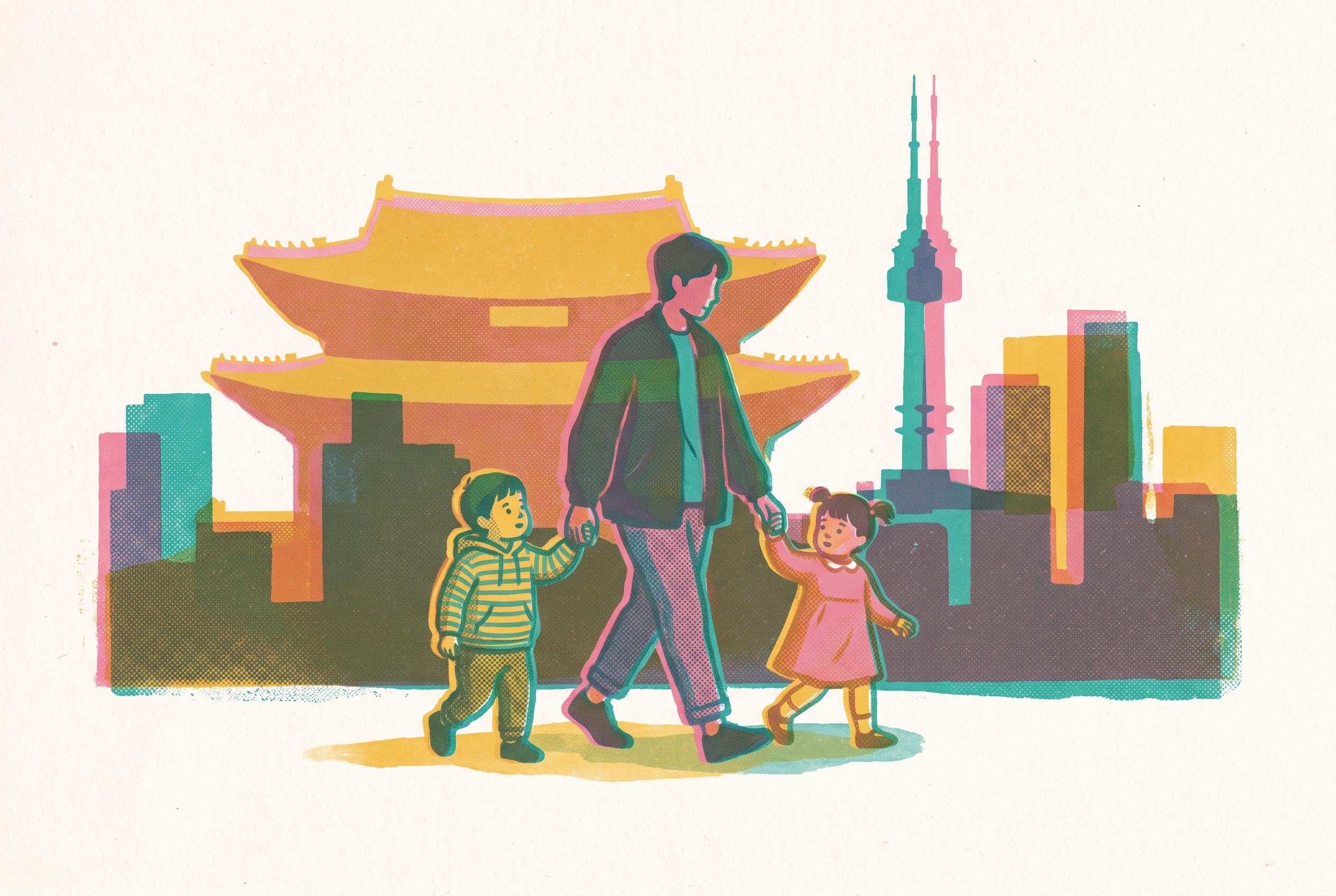
Seoul with kids under five works best when the city’s family infrastructure does the heavy lifting and the itinerary respects small children’s limits. The lifts, indoor play spaces and welcoming restaurants make daily life easier. Choose experiences that suit the age, keep each day close to one area and leave room to stop.
Why Seoul works structurally for families with children under six
Nearly every subway station has elevators and dedicated wide stroller or wheelchair gates. Trains are clean, air-conditioned and frequent, so public transport is a workable part of a family trip. Young children can also travel free, and nursing rooms are easy to find. These are useful provisions even on a day with no sightseeing at all.
That support extends beyond transport. Restaurants often have children’s menus or smaller portions, and many have high chairs. Korean hospitals provide high-quality, affordable care, while pharmacies, marked 약국, stock familiar children’s medicine brands. Public safety is also very high, with violent crime against tourists essentially nonexistent. None of this removes the work of travelling with a baby or toddler, but it reduces the number of basic needs parents must solve alone. The case for Seoul rests on that everyday infrastructure.
Where the city's stroller-friendliness breaks down and what to carry instead
The infrastructure is strong, but the ground beneath the stroller is less consistent. Jamsil, Gangnam and Myeongdong have flat pedestrian surfaces, spacious lifts and readily available family restrooms. The older neighbourhoods can be harder to get around when a child is too tired to walk.
Gyeongbokgung Palace and Changdeokgung Palace allow strollers in most areas, but their stone paths are uneven. Changdeokgung’s Secret Garden has slopes too, and the hillside villages take more effort to walk through than the flat shopping districts. Bring a soft-structured carrier as backup, using the stroller in commercial areas and switching for palace gardens and hillier streets. If the trip is mostly mall-anchored, stroller rental at major retail spaces, including Hyundai Department Store, can remove the need to fly with a bulky pushchair. Use Naver Maps to find the way, as Google Maps is less reliable in Korea. It can help to search in English on Google, then copy the Korean place name into Naver or Kakao.
The neighbourhood logic: anchoring each day to one area instead of crossing the city
Seoul is spread out, and the time shown for a train journey is not the full door-to-door journey. Stations are large, while interchanges add time when travelling with a stroller. The biggest planning mistake is therefore not picking a disappointing attraction. It is stitching together too many neighbourhoods and spending a child’s useful energy getting between them.
Instead, choose one area and one main thing to do each day, then leave the nearby activities as options. Jamsil connects Lotte World, Lotte World Aquarium and Lotte World Mall underground to the subway station. In Gangnam, COEX Aquarium and Starfield Library share a mall and fit naturally into one afternoon. The Gwanghwamun and Jongno belt gathers Gyeongbokgung Palace, Changdeokgung Palace, Bukchon Hanok Village and hanbok rental within walking distance or a short ride. That makes a cultural half-day possible, with a carrier for the hillier parts. Myeongdong’s shopping, street food and the Namdaemun Gate area are nearby, making them optional additions after a Jongno morning.
Kids' cafés: Seoul's most practical solution for toddlers who need to move
A toddler can be finished with sightseeing and still have plenty of energy. Seoul’s kids’ cafés give that energy an outlet. These indoor places charge for play and have heating, cooling and soft floors that help keep children from getting hurt. They group children by age, so small children have room to play with others at a similar stage without having to compete with rough older children. They answer a basic question that city itineraries often ignore, namely where a child can move when looking at things is no longer enough.
Pororo Park builds its play and shows around the Pororo cartoon characters and is best suited to children aged 8 and under. For a young fan, the familiar characters make it an attraction in its own right. Other named options include Lilliput, Littland, Playz Lounge, Jjae Kakseom and Cafe de Enfant, with different formats and neighbourhood locations. Plan a slower half-day around a kids’ café, especially when dealing with jet lag on the day of arrival or when it rains.
The Jamsil district as a self-contained family day
Jamsil puts the one-area approach into its most practical form. One subway stop serves a theme park, an aquarium and a mall through underground connections, with flat stroller-friendly surfaces and no need to move between them in bad weather. The day can change direction without another journey across Seoul.
Lotte World’s indoor section takes heat, rain and cold out of the immediate equation, which is useful in Korean summer or winter. Inside, Kidstoria provides a fairytale-themed play zone for younger children, with padded equipment scaled for climbing, crawling and exploring. It gives toddlers something substantial to do even when the main rides are beyond them. Weekday mornings have shorter lines, so they are worth choosing if timing is flexible. Small children may remember Lotte World Aquarium for its beluga whale, making it another place to spend the day, with the mall there for a slower pace. Klook sells tickets for both Lotte World and the aquarium, but prices shift and quoted 2026 figures may be outdated, so verify current admission and package details before buying.
Culture that actually works for under-fives: hanbok, palaces, and Gwangjang Market
Parents come to Seoul for more than soft play, and toddlers can enjoy cultural outings along with them. The useful distinction is between explaining history and giving a child something concrete to join in with. Hanbok rental does the latter. Toddler sizes are available, so the whole family, including the youngest, can dress up. Wearing a proper full hanbok also provides free entry to Gyeongbokgung Palace and Changdeokgung Palace, giving the activity a practical payoff.
The costume makes a palace visit more engaging, while Gyeongbokgung’s colourful changing of the guard supplies the spectacle. At Gwangjang Market, children can join in through the food, colours, smells and live food stalls, including fish tanks. It also pairs with nearby Dongdaemun Design Plaza if energy allows. Beyond the central sights, children can see traditional buildings and demonstrations at Korean Folk Village without having to sit still for a history lesson. Its quoted e-ticket price for adults on weekdays in October 2026 was 22,000 won, but that figure may be outdated. Reports from mid-2026 put children aged 36 months–13 at a higher rate, and gate prices appear to have risen, so verify prices on the day.
Day trips filtered for under-fives: what works and what to skip until they're older
A good day trip for an older child can be a poor use of a toddler’s energy. Travel time and the length of the visit can drain a toddler’s energy, while the age needed to enjoy the main attractions can limit their appeal, regardless of a place’s reputation. Korean Folk Village is manageable for under-fives when kept to a half-day. Its outdoor, walkable setting gives children traditional buildings and demonstrations to look at without requiring them to absorb a long explanation. The limit on duration is part of what makes it work.
Everland, in Yongin, is about one hour from Seoul by shuttle from Gangnam. Its roller coasters and ZooTopia safari make it a better fit for ages 6+, while the outing can be exhausting with toddlers. For under-fives, Lotte World is the better call because it avoids building the day around that extra journey. Save the DMZ for a future trip, too. It is not an under-five outing, and JSA tours have minimum-age restrictions that vary by operator.
Where to stay: the practical case for serviced apartments and ondol-floor accommodation
Ondol-floor accommodation has a practical appeal that is easy to overlook when comparing room photographs. With the traditional way of sleeping on the floor, a toddler who can move around has no raised bed to fall from. The suitability of a floor setup still depends on the infant. The room’s actual sleeping arrangement needs to fit the child. In Seoul, accommodation type can change that arrangement as much as room size does.
Serviced apartments often have floor heating, rice cookers and much more space than a hotel room. For stays longer than three days, they are the preferred base because parents can prepare simple meals and children have room to move. The accommodation decision therefore supports the rest of the itinerary, especially when the day includes an afternoon pause. A room that works during waking hours can be as useful as one that works at bedtime.
Feeding under-fives in Seoul without stress
Restaurants and everyday shops in Seoul remove much of the friction around feeding a picky toddler. Babies are usually welcome at Korean restaurants. Children’s menus, marked 어린이 메뉴, and smaller portions give families ways to order without turning every meal into a negotiation. Aim for a meal the child can manage.
The backup is the convenience-store network. GS25, CU and 7-Eleven are on every block, open around the clock and stocked with milk, snacks, wet wipes and basic baby supplies. Myeongdong also has street food and familiar choices for pickier eaters, making it a useful evening destination after a cultural day. In serviced apartments, families can use the rice cooker to make plain rice easily while adults eat something else.
Pacing the days: the rhythm that keeps under-fives and adults both happy
All of these choices depend on a rhythm that leaves space for children’s changing energy. Build in a slow first day rather than treating arrival as the start of a sightseeing race. An indoor kids’ café can give that day a focus while the family recovers from jet lag. After that, keep the main outing in one area and plan its start and end around naps. The plan should make stopping easy, with room to pause between bookings.
Afternoon rest is non-negotiable for under-twos. For threes and fours, a mid-afternoon kids’ café or mall break can provide a reset without a formal nap. Flexibility also matters when the disruption is larger than a tired child, such as a flight cancellation or hotel change. Those changes can cascade into missed naps and overtired children. An AI trip-management tool that surfaces alternatives immediately can help parents adapt without starting a fresh search. The same principle applies at every scale, from choosing a neighbourhood to changing a booking. Seoul supplies much of the practical support, but the successful trip is the one that leaves enough room to use it.
Every new piece from Little Legs Abroad, as it's published.
Follow