Best Family Hotels in Kyoto for Young Kids
Pick your neighborhood first, then find the rooms that work.
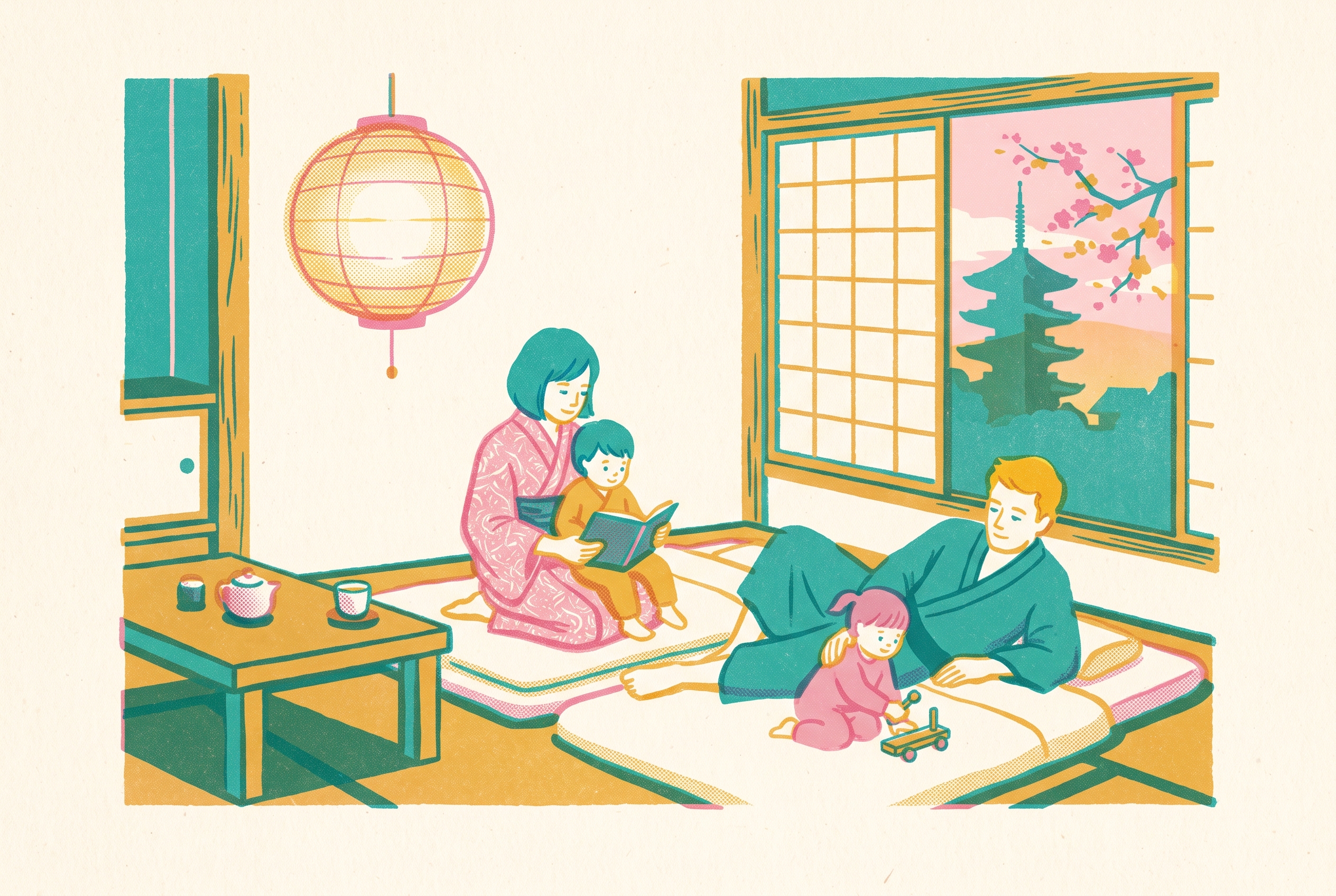
The best family hotel in Kyoto for young kids is the one that fits your days as well as your sleeping arrangements. Choose the neighborhood first, then look for the kitchen, laundry, space and child policies that make a multi-night stay work. A good room cannot make up for a tiring journey back at every nap time.
Why neighborhood comes before hotel when planning a Kyoto family trip
A common mistake is to look at hotel listings before choosing where to stay. That puts room photos ahead of the journeys your family will make every day. Kyoto’s sights are spread across the city, so choosing a zone is really choosing how much travel sits between sightseeing, meals and sleep. A stroller-friendly five-minute walk and a crowded bus transfer with a tired toddler are not interchangeable.
Kyoto is compact compared with Tokyo, and a car can cross it in roughly 25 minutes in light traffic. But that says little about moving around with luggage, a stroller and young children. Your base shapes the return after sightseeing and the trip back for a nap.
Kyoto Station zone: the lowest-friction arrival for families with young children
Kyoto Station is the practical pick for Shinkansen arrivals, airport transfers and day trips to Nara or Osaka. It removes an extra journey just when the family has the least patience for one. That matters most after a long trip with bags and a stroller.
MIMARU Kyoto STATION is a two-minute walk from the Hachijo East Exit. Every room is over 40 sq m and has a bunk bed and full kitchen, with crib lending, bed guards and stroller loans available. The apartment layout works well for families who want to take care of meals and bedtime on their own. Pokémon-themed rooms are available, but demand makes them harder to book than the non-themed rooms.
Miyako Hotel Kyoto Hachijo is a two-minute walk from the Hachijo exit, with deluxe family rooms sleeping up to six. Hotel Granvia Kyoto puts you right inside the station and has 62 sq m family rooms that sleep up to five. Granvia also offers a breakfast buffet with Japanese and Western kids’ options, while the Kansai airport limousine bus stops at Hachijo-guchi on the station’s south side, a short walk away. These are strong logistical advantages, but this zone has the least atmosphere of the three. Beyond three or four nights, a transit hub may feel less rewarding as a home base than a traditional Kyoto streetscape.
Central Kyoto (Nijo Castle, Kawaramachi, Higashiyama): walkability and the best apartment-hotel options
Central Kyoto makes the strongest all-round case for a first visit of three to four days. Depending on the address, you can walk to Nishiki Market, Nijo Castle or the Gion streets. central” covers several neighborhoods. The best location is the one close to the sights your family actually wants to visit.
That walkability overlaps with a dense choice of apartment-style hotels. MIMARU Kyoto Nijo Castle and MIMARU Suites Kyoto Central offer the domestic basics, including a full kitchen, washer-dryer, crib lending and bed guards. PLAY!! RESI STAY is a different proposition, with built-in play areas for active young children. It also has in-room kitchen and laundry facilities, so choosing play does not mean giving up those practical essentials.
For a full-service alternative, Cross Hotel Kyoto in Kawaramachi is within walking distance of Nishiki Market and the Kyoto International Manga Museum. The rooms sleep up to four or five guests, depending on the room type, and young children eat free at the breakfast buffet. Hyatt Place Kyoto offers another option near the Imperial Palace and Nijo Castle, with a direct connection to Marutamachi Station and room configurations for three to four guests. The central zone’s drawback is arrival with heavy luggage after the Shinkansen. Taking a bus or subway adds work that staying in the Station zone saves, though a private transfer takes care of that concern.
Arashiyama: when scenic atmosphere and large rooms outweigh convenience
Arashiyama offers a slower, greener base, but one appealing property needs removing from a young-family shortlist immediately. HOSHINOYA Kyoto, the boat-access river ryokan, does not accept children 11 and under. An extra fee or advance arrangement does not make it an option for toddlers. The wider area can still be a good choice if the distance to the rest of Kyoto works for the trip.
The Bamboo Grove, Togetsukyo Bridge and riverside atmosphere put much of Arashiyama’s appeal within walking distance. The area also offers more options with larger rooms and natural onsen access than the Station or central zones. The GrandWest Arashiyama adds in-room kitchen and laundry facilities to that choice. Those features make a stronger case for settling in than for using the area simply as a place to sleep.
The cost is commute time when you want to explore elsewhere. Arashiyama makes most sense for stays of four or more nights or a deliberate slow-travel trip, rather than as a sole base for a visit under four days. Its quieter rhythm will suit families who want time by the river and frustrate those trying to cover the city. Choose it for the trip it supports.
The amenities that actually determine whether a multi-night stay with toddlers works
Once the zone is right, daily livability should decide the shortlist. For a four-night stay with toddlers, a 40 sq m apartment with a kitchen and in-room washer can be more useful than a larger traditional room without either. A kitchenette lets parents warm baby food and make simple breakfasts without fitting every meal around a restaurant. In-room laundry reduces the need to pack a week’s worth of children’s clothes. Beyond the apartment hotels already mentioned, Glanz Kei Kyoto Station also offers an in-room kitchen and laundry.
Space matters, but sleeping configuration matters just as much. A “family room” can mean two adults and one small child sharing a bed, rather than separate sleeping areas or room for a travel cot. Families of five or more should check how the beds are set up before they book. MIMARU’s bunk-bed rooms work well for children old enough to use them and give them some space of their own after bedtime. A room’s capacity alone does not tell you how comfortably the family will sleep.
Rules that let children co-sleep free can also make a big difference to the cost. MIMARU Kyoto Nijo Castle allows up to 2 children through age 6 to co-sleep free, while MIMARU Suites Kyoto Central and The GrandWest Arashiyama also set the threshold through age 6. The Thousand Kyoto extends it through age 12. Miyako Hotel Kyoto Hachijo allows children through elementary school age to share free, with one child per bed and meals charged separately. Hotel Granvia Kyoto allows children aged six and under to stay free when sharing a bed or using a crib.
Baby equipment needs to be checked as closely as beds. Miyako Hotel Kyoto Hachijo has free baby cots for infants under six months, but supplies are limited, and its guest bathrooms have a step except in the Universal Room. Glanz Kei does not offer bed guards, which matters for toddlers who roll. So few hotels have pools that wanting one can also shape the choice of zone. Westin Miyako Kyoto has a year-round indoor pool welcoming children, while ROKU KYOTO (LXR by Hilton) offers daytime access to its year-round thermal pool for children ages 4–16. These are a limited selection of specific property features, and policies should be confirmed at booking because they can change.
The luxury tier in Kyoto: what five-star properties actually offer families with young children
A luxury premium makes sense when it pays for something your family will use. A kids’ club, a pool the children can use or rules that let them stay free can do more for a family than a well-known brand alone. The useful comparison is therefore between the child’s age and the hotel’s actual offer. A service for older children may be of little use to a family with an infant.
Six Senses Kyoto has a free kids’ club for children ages 5–12. Four Seasons Hotel Kyoto allows free co-sleeping through age 18, the most permissive threshold in this luxury selection. Westin Miyako Kyoto combines its pool with free co-sleeping through elementary school age, limited to one child per bed. RIHGA Royal Hotel Kyoto takes a different approach through its “Hiyoko” baby rooms, whose tatami layouts suit families with infants.
Saturday rates can be meaningfully higher than midweek, and foliage-season Saturdays can bring limited availability, so advance booking and date flexibility matter particularly here. Even then, the tier’s main strength is on-site programming and permissive policies. Families who need a kitchen and in-room laundry will generally find the apartment-hotel tier more practical, regardless of budget.
The ryokan question: when a traditional stay works with young children and when it does not
Should a family with young kids stay at a ryokan? It can work, but a traditional stay is not a safe default without checking the conditions. Age floors, communal bathing rules and fragile shoji screens can all complicate a stay with infants or toddlers. A ryokan stay with children depends on whether the particular property accommodates their needs.
Tatami itself can be a strong fit. The floor becomes a play surface for crawling babies and toddlers, while futons offer a way to co-sleep close to the ground. Families can get that layout without committing to a full ryokan experience. Miyako Hotel Kyoto Hachijo offers two connected tatami rooms of 8 and 6 tatami mats, and MIMARU Kyoto Nijo Castle has tatami options as well as Western-style rooms. The Hiyoko rooms mentioned above provide another hotel-based route.
Room photos will not show what the bathing rules are. Many ryokan and some hotels impose age minimums or bans on children in communal baths, so confirm the specific policy before booking. Arashiyama also has machiya, or traditional townhouse, rentals that offer whole-house privacy, tatami and a Japanese bath without communal bathing. Suitability for young children varies among traditional rentals.
How AI travel planning tools fit into booking a Kyoto family trip
AI travel planning tools can turn a plain-language request into a structured itinerary quickly. They help bring together choices of neighborhoods, routes to get around and things to do in order. But a plan can look tidy even if a restaurant is closed, the stops are far apart or there is too little time for a transfer with luggage and a stroller. Those gaps are especially hard on families with toddlers because it is rarely easy to change plans.
Local holidays, ryokan age restrictions, stroller-hostile temple stairs and children’s onsen policies need closer attention. Planning for Golden Week and autumn foliage season also takes knowledge of when and where Kyoto gets crowded, especially for families who have to travel during school breaks. Specialist planning tools can use that knowledge, but travel agents who know Japan are more reliable when it comes to those local details.
A conversational planner is most useful when the request describes how the family travels. Two children, early dinners, stroller-accessible routes and no packed mornings after travel days give it more to work with than the destination alone. An itinerary that includes hotels in the right zone can then reduce the coordination work parents face. Start with the trip’s pace and logistics so the neighborhood comes before the hotel.
A practical summary of how to sequence the booking decision
Choose Kyoto Station for easier arrivals and onward travel, central Kyoto for walkable sightseeing on a three-to-four-day visit, or Arashiyama for a longer, deliberately slower stay. Then filter by the needs that cannot be compromised, including infant equipment, kitchen access, laundry, sleeping configuration and co-sleeping rules. For larger families, confirm the beds included in a “family room”.
Only then compare specific properties and budget tiers. Check the rules for children, especially whether they can use communal baths, before booking. A family stay has to work throughout the day.
Every new piece from Little Legs Abroad, as it's published.
Follow